
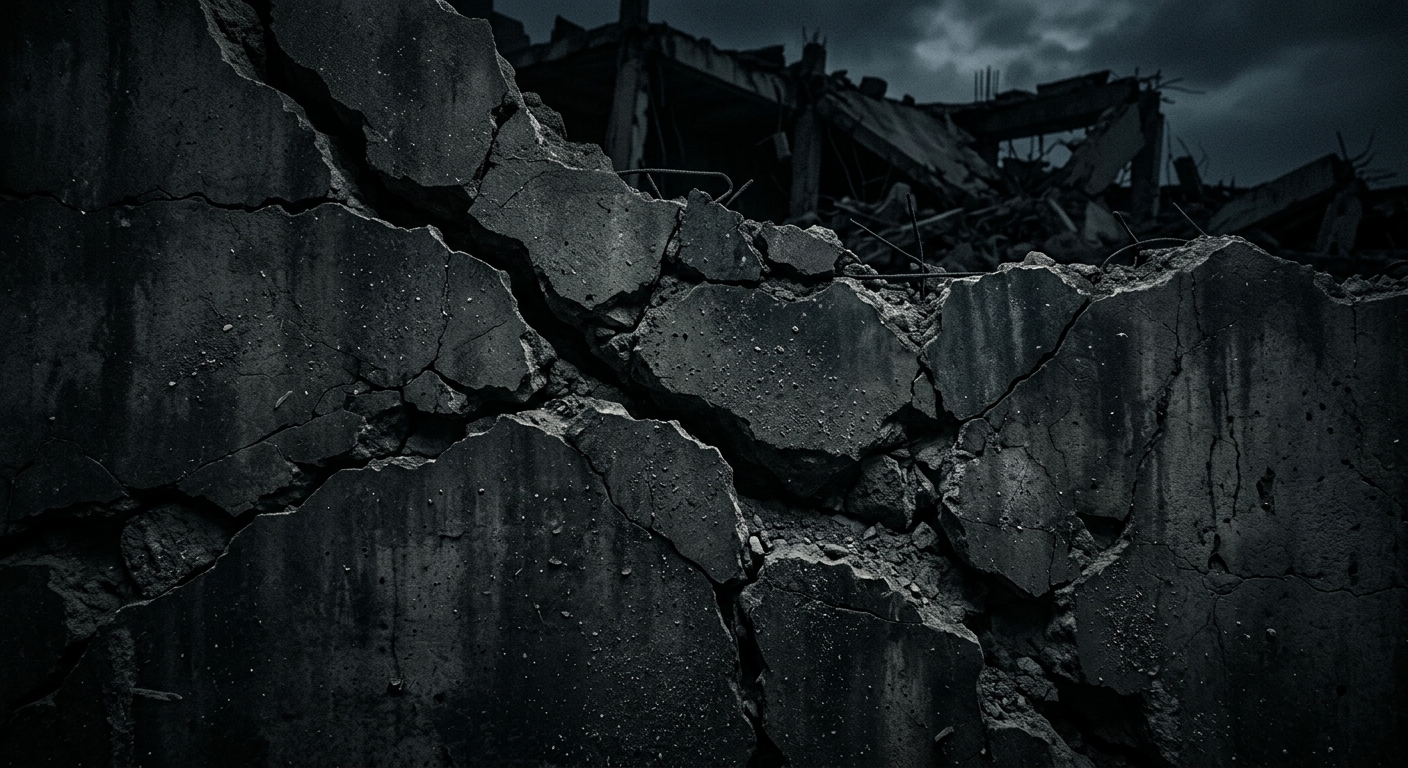
Building Collapse Claims
Building collapse is among the most severe property losses — and among the most technically complex to claim. Whether from structural failure, progressive deterioration, hidden defects, or the weight of ice and snow, collapse claims require engineering analysis, code review, and a thorough understanding of policy triggers and exclusions.
What Building Collapse Damage Entails
Structural Systems
Load-bearing walls, foundation elements, floor and roof framing, and structural connections are directly compromised. Assessment requires licensed structural engineers — not just an insurance adjuster's visual inspection — to determine the cause, scope, and necessary remediation.
Building Envelope
Collapse destroys roofing, exterior walls, windows, and weather barriers. The entire building envelope may need reconstruction — not just the visibly collapsed section.
Mechanical, Electrical & Plumbing (MEP) Systems
HVAC ductwork, electrical wiring, plumbing lines, sprinkler systems, and gas lines running through collapsed areas are destroyed and must be fully replaced to current code.
Contents & Interior Finishes
Everything inside the collapse zone — furniture, equipment, inventory, fixtures, finishes, flooring — is typically a total loss. In partial collapses, adjacent areas may also have contents damage from debris, dust, and exposure.
Site & Foundation Impact
Collapse can destabilize surrounding soil, damage underground utilities, crack foundation elements beyond the immediate collapse zone, and render the entire site unsafe for occupancy.
How Insurance Policies Address Building Collapse Claims
Collapse coverage in standard property policies is typically limited to collapses caused by specific named perils: fire, wind, hail, weight of ice or snow, and hidden decay — but only when the collapse is sudden and complete, not gradual settling or cracking. Many policies contain an "additional coverage for collapse" provision with specific triggers. Understanding which collapse scenarios your policy covers — and the distinction between "collapse" and "settling, cracking, bulging, or expansion" — is critical and often the central dispute in these claims.
What Insurers Often Overlook
Sudden vs. gradual collapse disputes
Insurers frequently classify progressive structural failures as "settling," "deterioration," or "long-term movement" rather than a covered sudden collapse. However, many policies do cover collapse caused by hidden decay or hidden insect damage that was unknown to the property owner before the collapse. Expert engineering analysis is essential to establish the precise mechanism and timeline of failure.
Hidden decay and latent defects
Collapse caused by hidden decay may be covered under the additional collapse provision, but insurers routinely dispute whether the decay was truly "hidden" or should have been discovered through reasonable maintenance.
Code upgrade requirements
Rebuilding after a collapse triggers current structural codes — including seismic provisions, enhanced load requirements, and modern connection standards — that differ substantially from the original construction. Ordinance or Law coverage is essential for these costs.
Full structural assessment scope
Insurer adjusters may propose repairing only the visibly collapsed section. However, structural forces often compromise adjacent framing, connections, and foundation elements that appear intact. Full engineering assessment is required.
Business interruption for commercial properties
Commercial collapse claims involve extended business interruption — often months or years of lost revenue during investigation, engineering, permitting, and reconstruction. These losses are routinely and substantially underestimated.
The Building Collapse Claim Timeline
Timelines vary significantly depending on claim complexity, insurer responsiveness, and state regulations. The ranges shown are general estimates — not guarantees.
Immediate (Hours 1–24)
Ensure safety — evacuate and secure the site. Document everything with extensive photos and video from multiple angles. Contact your insurer. Preserve the collapse scene for engineering investigation.
Assessment (Days 2–30)
The insurer sends their adjuster and may retain their own engineer. A parallel independent structural engineering assessment is essential. The insurer's initial estimate is a starting point, not the final word.
Documentation (Weeks 2–12)
A detailed proof of loss with structural engineering reports, contractor bids for full reconstruction, code analysis, and contents inventory is submitted. Collapse claims demand the most thorough documentation of any claim type.
Negotiation (Weeks 4–24)
Collapse claims involve the largest dollar amounts and the most complex negotiations. Disputes over cause of loss, scope of structural replacement, and code upgrades are the norm — professional representation has its greatest impact here.
Resolution & Reconstruction
Once agreement is reached, engineering, permitting, and reconstruction begin. A thorough, well-documented claim with independent engineering analysis tends to resolve more efficiently and at a higher value.
How a Public Adjuster Strengthens Your Claim
A public adjuster works exclusively for you — never the insurance company. They coordinate independent structural engineering analysis; document the full scope of collapse damage including adjacent structural impacts; prepare a comprehensive proof of loss with engineering and contractor support; and negotiate directly with the insurer on your behalf. Their contingency fee structure means their interests are aligned with maximizing your recovery.
NY, NJ & CT Specifics
In New York, consumer protections are established under Insurance Law Article 21 (licensing) and Regulations 64 and 25 (fair claims handling and public adjusting standards). New Jersey and Connecticut have comparable regulatory frameworks. The tri-state area presents unique considerations: older building stock predating modern structural codes, high construction costs in the NYC metro area, and specific collapse coverage triggers under New York case law that differ from other jurisdictions. Public adjusters licensed in all three states understand these regional regulatory and construction landscapes.
Disclaimer: All claims are subject to the specific terms, conditions, limits, and exclusions of your individual insurance policy. Prior results do not guarantee a similar outcome. Foxwood Adjusters, LLC provides licensed public adjusting services and is not a law firm. This content is for educational purposes and does not constitute legal advice. Public adjuster contingency fees are subject to statutory limits in New York, New Jersey, and Connecticut.
Ready to get the settlement you deserve?
Your free consultation includes a policy review and claim assessment — no obligation, no upfront cost.
Available 24/7 • Free Consultation • Serving NY, NJ & CT