
Winter & Freeze Damage Claims
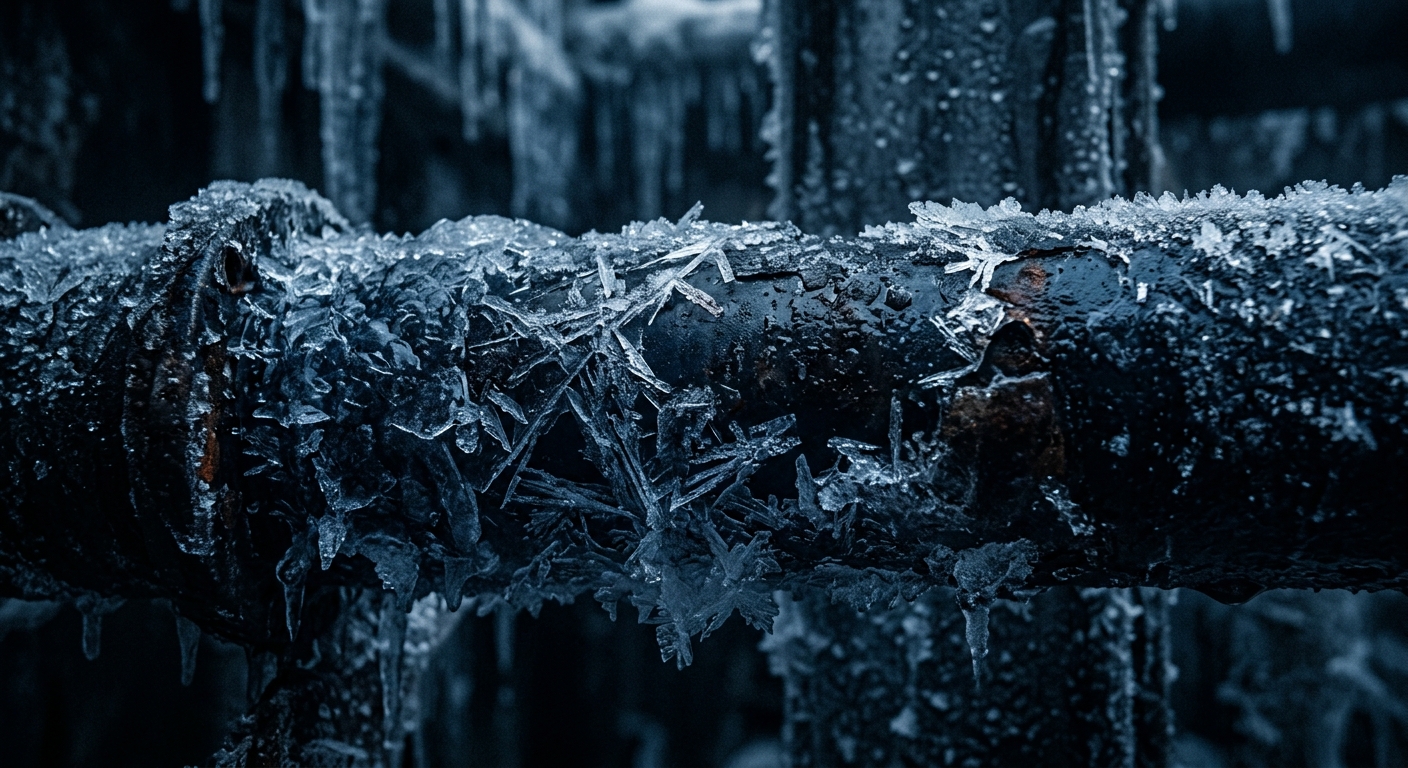
Winter weather brings unique threats: ice dams that force water under shingles, frozen pipes that burst when they thaw, snow loads that stress roof structures, and freeze damage to exterior systems. These claims often involve complex investigations to determine the precise cause, and insurers have many avenues to minimize their exposure.
What Winter & Freeze Damage Entails
Ice Dam Damage
Ice dams form when heat escaping from the attic melts snow on the roof, which refreezes at the eaves. Water backs up under shingles into the attic and walls, damaging insulation, drywall, ceilings, and structural framing — often in areas not visible until demolition begins.
Frozen & Burst Pipes
When water freezes inside pipes, it expands and can split copper, crack PVC, and rupture fittings. The real damage often occurs when the pipe thaws and water flows freely — saturating walls, floors, and ceilings throughout the property.
Snow Load Stress
Accumulated snow and ice can exceed roof design loads, particularly on flat or low-slope roofs common in commercial buildings. Structural deflection, cracked rafters, and in extreme cases partial collapse may result.
Freeze Damage to Exterior Systems
Exterior faucets, irrigation systems, HVAC condensate lines, gutters, and downspouts can be damaged by freezing. Pool equipment, outdoor kitchens, and decorative water features are also vulnerable.
Contents Damage from Water & Cold
When pipes burst or ice dams cause interior leaks, furniture, electronics, flooring, documents, and stored belongings may be damaged. In unheated spaces, extreme cold itself can damage electronics, musical instruments, artwork, and temperature-sensitive materials.
How Insurance Policies Address Winter Damage Claims
Winter-related damage — burst pipes, ice dams, snow load, and freeze damage — is typically covered under standard homeowners and commercial property policies, provided the property was adequately heated or the water supply was properly shut off during vacancy. Insurers commonly invoke "failure to maintain heat" or "neglect" exclusions to deny freeze claims. Documentation that the property was heated and maintained is essential. Coverage for ice dam damage is generally included, but insurers may dispute whether the damage resulted from a single event or from long-term seepage.
What Insurers Often Overlook
Failure to maintain heat disputes
Insurers may deny frozen pipe claims by asserting the property was unheated or inadequately maintained. Proof of heating, thermostat settings, and regular occupancy is critical to counter these denials.
Ice dam classification
Ice dam damage may be classified as "gradual seepage" rather than a sudden event, triggering exclusions. Expert documentation of the ice dam formation and the resulting water intrusion timeline is essential.
Hidden water damage in walls and ceilings
Water from ice dams and burst pipes travels through wall cavities and ceiling spaces before becoming visible. By the time staining appears, structural framing, insulation, and electrical systems may already be compromised.
Snow removal costs
Emergency snow removal from roofs to prevent collapse may or may not be covered depending on policy language. Insurers rarely volunteer this coverage when it exists.
Code upgrade requirements
Repairs after winter damage often trigger current building code requirements — including ice and water shield underlayment, upgraded insulation, and pipe freeze protection — that insurers may omit from initial estimates.
The Winter Damage Claim Timeline
Timelines vary significantly depending on claim complexity, insurer responsiveness, and state regulations. The ranges shown are general estimates — not guarantees.
Immediate (Hours 1–24)
Stop active leaks. Document all damage with photos and video. For frozen pipes, shut off water at the main and open faucets to relieve pressure. Keep receipts for emergency repairs.
Assessment (Days 2–14)
The insurer sends an adjuster to inspect. Their estimate will likely cover only visible damage. A parallel independent assessment using thermal imaging and moisture detection identifies hidden water damage behind walls and ceilings.
Documentation (Weeks 1–6)
A detailed proof of loss — including contractor bids, moisture mapping, and documentation of heat maintenance — is submitted. This is especially important for winter claims where cause-of-loss disputes are common.
Negotiation (Weeks 3–12)
Professional representation has the greatest impact during this phase, particularly on disputes over heat maintenance, ice dam classification, and hidden water damage scope.
Resolution & Restoration
Once agreement is reached, funds are released and repairs begin. A thorough, well-documented claim tends to resolve more efficiently.
How a Public Adjuster Strengthens Your Claim
A public adjuster works exclusively for you — never the insurance company. They document the scope and cause of winter damage, counter insurer arguments about maintenance and heat, prepare a comprehensive proof of loss, negotiate directly with the insurer, and handle the administrative burden. Licensed professionals, contingency fee aligns interests with yours.
NY, NJ & CT Specifics
In New York, consumer protections are established under Insurance Law Article 21 (licensing) and Regulations 64 and 25 (fair claims handling and public adjusting standards). New Jersey and Connecticut have comparable regulatory frameworks. The tri-state area presents unique winter considerations: older building stock with original insulation and roofing vulnerable to ice dams, high construction costs in the NYC metro area, and properties in northern zones where freeze-thaw cycles are particularly aggressive. Public adjusters licensed in all three states understand these regional factors.
Disclaimer: All claims are subject to the specific terms, conditions, limits, and exclusions of your individual insurance policy. Prior results do not guarantee a similar outcome. Foxwood Adjusters, LLC provides licensed public adjusting services and is not a law firm. This content is for educational purposes and does not constitute legal advice. Public adjuster contingency fees are subject to statutory limits in New York, New Jersey, and Connecticut.
Ready to get the settlement you deserve?
Your free consultation includes a policy review and claim assessment — no obligation, no upfront cost.
Available 24/7 • Free Consultation • Serving NY, NJ & CT